Which product group?
Which products could be affected by DPP or adjacent requirements, and when?
The Digital Product Passport can feel like a maze of goals, standards, data, systems and new obligations. We do not promise a five-minute solution. We create clarity together so you can make the right decisions.
For companies that do not want to wait for the next obligation, but want to be prepared and stay ahead of change.
Before selecting software or starting a major project, clarify relevance, data readiness and business value. These eight questions provide a practical starting point.
Which products could be affected by DPP or adjacent requirements, and when?
Which product, material, sustainability or evidence data is already being requested?
ERP, PDM/PLM, PIM, CMS/DMS, Excel, PDF – or still in people’s heads and emails?
Who creates, validates, maintains and approves product and sustainability data?
Where are the gaps in origin, materials, PCF, repair, compliance or supply-chain information?
Which data can also support service, sales, AI, audits and circularity?
Which manageable product can test the path quickly and realistically?
Where can time, cost and risk be reduced – or new services and revenue created beyond compliance?
Then you will know whether you need to act at all – and, if so, where to start.
The DPP is not owned by a single department. Management sets direction and priority – data and processes are created across the company.
Good data clarity should be visible in the business – in speed, cost, quality and new opportunities.
Provide reliable evidence faster.
Reduce manual compilation and duplicate work.
Reliable data accelerates decisions.
Clear sources, ownership and versions.
Reuse data for service, AI, refurbishment and new offerings.
At the Academy of Communication, we do not start with a tool. We start with your company: your products, data, customers, supply chains and goals.
We assess requirements, customer expectations and industry pressure. Not everything applies immediately – but much of it requires preparation.
Product data, documents, evidence, ERP, PDM, CMS, Excel and supplier data: often more exists than expected – it is simply not connected.
We identify gaps: what needs to be sourced, structured, calculated, connected or clarified organisationally?
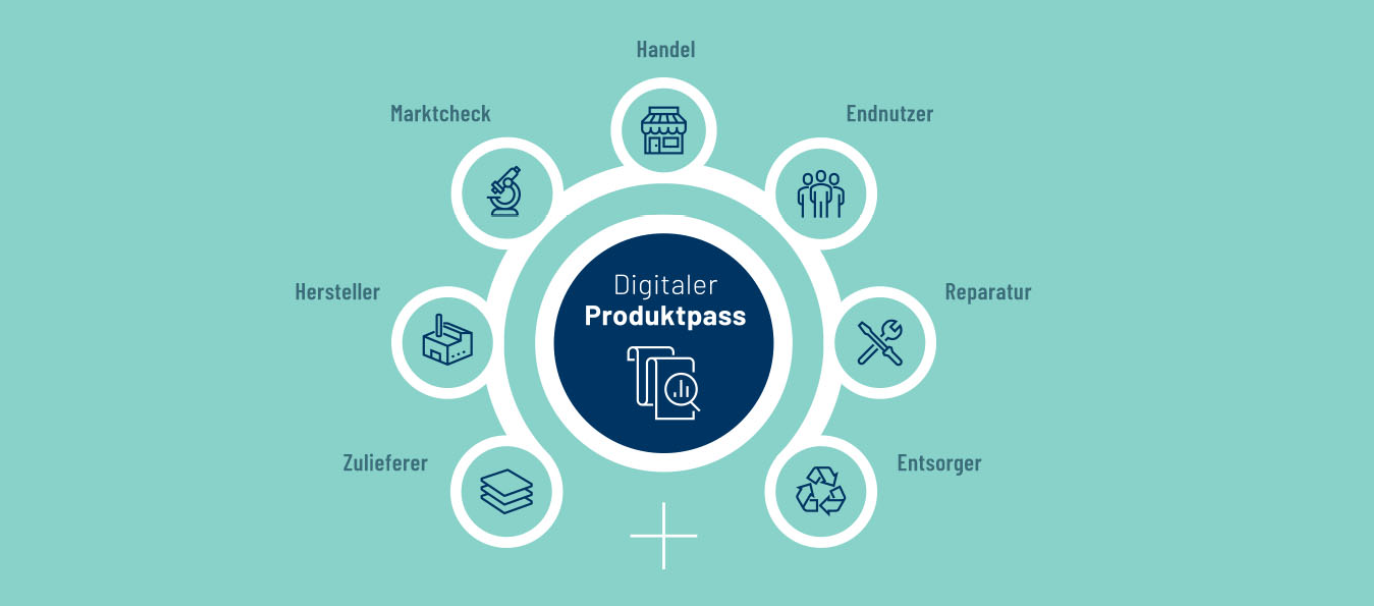
A DPP connects many stakeholders across the lifecycle. That is why it is not simply an IT project, but a data, process and business-model project.
Which products, markets, customer requirements and risks are relevant?
Where is data created, who owns it and how reliable is it?
What can be tested pragmatically and what business case emerges?
Companies that structure product data today can accelerate processes, serve customers better and create new offerings tomorrow.
Information no longer needs to be manually collected again and again.
Customers, market surveillance, service teams and supply chains receive reliable information.
Lifecycle services, repair, spare parts, digital value-add and data-driven offerings become possible.
In 30 minutes, we assess relevance, data readiness and the next step together. Afterwards, you will know more clearly whether you need to act – and, if so, where to begin.
This conversation is for companies that genuinely want to get started. If you fundamentally do not want to change anything, you do not need a meeting.